
101st Annual Conference
It was wonderful to see everyone in Denver and online for WEAI's 101st Annual Conference. We thank participants for their contribution to the program and for their continued support of and involvement in WEAI activities. Our common goals of fostering excellence in economic research and of sharing that research in an open and productive way remains top of mind as we look forward to planning future conferences!
The program platform will remain open for browsing as long as is feasible. A PDF of the print program will be archived on the Annual Conferences web page, along with an online addenda of post-production changes.
FEATURED SPEAKERS
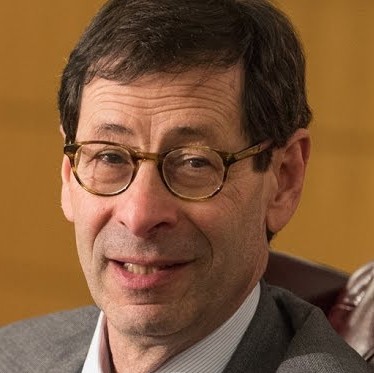
Maurice Obstfeld
C. Fred Bergsten Senior Fellow
Peterson Institute for International Economics
Presidential Address
"Toward the Post-Modern World Economy"
[slides available upon request]
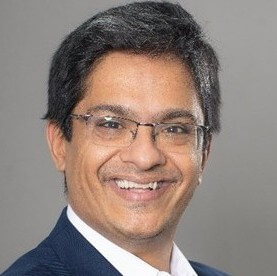
Karthik Muralidharan
Tata Chancellor's Professor of Economics
University of California, San Diego
Keynote Address
"Accelerating Development: The Imperative of State Capacity"
[view slides]
PROFESSIONAL DEVELOPMENT SESSIONS
Professional Development sessions this year include the following:
- GRANT-SEEKING FROM FOUNDATIONS: STRATEGIES AND TIPS FOR APPLICANTS
- THE HIDDEN CURRICULUM: EVERYTHING YOU WEREN'T TAUGHT IN GRADUATE SCHOOL ABOUT DOING APPLIED RESEARCH [view slides / view more slides]
- PART 1: BUILDING AND DOCUMENTING A REPLICATION PACKAGE, INCLUDING WHEN DATA ARE CONFIDENTIAL [view slides]
- PART 2: ADVANCED TOPICS: STRONG REPRODUCIBILITY AND EARLY DATA PRESERVATION FOR TRANSPARENT REPLICATION PACKAGES [view slides]
- FRED®: ACTIVE LEARNING WITH ECONOMIC DATA [view slides]
- Where do I find the paper I'm supposed to discuss? Visit the conference platform, log in using your WEAI credentials, navigate to your session, click on the paper you are scheduled to discuss (first paper to first discussant, second paper to second discussant, etc.), scroll down to view any uploaded documents. No paper uploaded? Reach out to the paper presenter, session chair, organizer, or WEAI.
- I would like to update my paper title or author list, how do I do that? You can revise your original paper information by revisiting your submission on the conference platform. After you log in, click MY SUBMISSIONS on the left side menu. Locate the submission for the 101st Annual Conference, click Revise/Edit and update as needed.
- How do I upload my complete paper? The same as above, you can upload your paper by editing your original submission. Navigate to MY SUBMISSIONS after logging in on the conference platform, revise/edit your submission and click the radio button to 'upload paper/handouts now' and a pop up will appear where you can drag/drop your files. Click through to save your submission and the uploaded paper will now appear for users logged in on the program platform.
- What time zone are the virtual sessions in? Mountain Daylight Time MDT (UTC-6)
- How will the virtual sessions work? WEAI will be scheduling a Zoom meeting for each virtual session. Those links will be posted on the conference platform (viewable/clickable when logged in). WEAI will let you know as soon as the links are available. The day of your session, a WEAI staff member will launch the Zoom meeting and await your arrival. When the session chair joins the meeting, we will hand over hosting responsibilities to them to run the session. We recommend the chair makes each participant in the session a meeting host in case anyone has an unstable internet connection the session can continue while that person gets reconnected.
- Will there be an event app? YES! We will be launching the app the week before the conference and will let you know when it's ready for action.
- Presenters can edit their paper title, abstract, etc., and upload complete papers by logging into the conference platform and selecting My Submissions from the menu. Select the submission for the 101st Annual Conference and click Revise/Edit to update as needed.
- If your session has discussants, they are assigned first paper to first discussant, second paper to second discussant, etc. However all session participants are expected to be familiar with all the papers in the session and to contribute to the discussion
- Papers should either be uploaded to the conference platform by presenters or circulated via e-mail. To access uploaded papers, login on the conference platform, navigate to your session and click on a paper to view any uploaded documents.
- Session time allocations (based on four papers): 105 minutes total. 15 minutes per paper presentation plus 5 minutes for the paper’s primary discussant, then time for all other participants’ discussion. The session chair may alter time allocations if appropriate.
- Projectors and screens will be provided in each meeting room, but NO LAPTOPS. Please coordinate with your fellow session participants to be sure one will be available or bring your own laptop.
- Email addresses for participants are not posted on the online program for privacy reasons. Session organizers will facilitate the discussion among their participants. WEAI sent a group e-mail thread to participants in each Volunteer Individual session on May 19th. Check your e-mail for that thread and reply all to coordinate in the lead up to the conference.
For volunteer sessions, we will have an in-person track (June 29 to July 3) and a virtual track (June 25 only). You will select in-person versus virtual at the time of registration and abstract submission.
Individuals are invited to submit their latest research for possible placement in a volunteer session. Abstracts will be blind reviewed by a screening committee and decision emails will be sent in early February. All paper presenters will be expected to provide comments on the other papers in their session to ensure that everyone receives constructive feedback on their research.
STEP 1 | REGISTER TO ATTEND
Payment of combined paper submission and registration fee are required before you can submit your abstract details for review. Registration is fully refundable if paper is NOT accepted. Submission portion of fee is non-refundable.
- Members (Professional): $290 ($95 submission + $195 registration)
- Non-members (Professional): $400 ($125 submission + $275 registration)
- Student Members: $190 ($95 submission + $95 registration)
- Student Non-members: $260 ($125 submission + $135 registration)
Hint: Join or renew your WEAI membership now and save -- plus you'll be entitled to a journal submission fee waiver for your conference paper if submitted to EI or CEP within six months after the conference. It's a win-win!
STEP 2 | SUBMIT YOUR ABSTRACT
Information needed for abstract review committee:
- Paper presenter's name, professional affiliation, title, and e-mail address; same information for coauthors.
- Paper title and paper topic area (three appropriate codes from the JEL Classification System).
- Abstract of 350 words or less including a statement of the research or policy question and the contribution made by the paper; as well as method(s), model(s) and, if applicable, relevant data including time frame and geographical scope.
Only research at the graduate level and above will be considered for volunteer sessions. Alternatively, undergraduates are welcome to coordinate with an advisor to organize a session featuring undergrad research papers.
Upload of your complete paper is requested by June 1 for circulation to your fellow session participants. Just before the conference, presenters will be invited to upload presentation slides for sharing on the conference platform.
Discounts: WEAI Institutional Member affiliates are eligible for a 20% discount on submission and registration fees. For the code to take the discount at checkout, ask your designated representative or contact us at 1-714-965-8800 or submissions@weai.org.
Questions? Contact submissions@weai.org.
Discuss a Paper or Chair a Session | Deadline February 1, 2026
Discuss a paper and give others the benefits of your expertise. Discussants are needed in all topic areas. Chair a session and foster the exchange of ideas. If you are interested in serving as a discussant or chair, but are not presenting a volunteer paper, please email sessions@weai.org.
We will have in-person sessions June 29 to July 3, and one day of virtual sessions on June 25.
Organize your own session and take charge of all the details. Sessions in all areas of economics and finance are welcome. Paper submission fees are waived for all papers in organized sessions, however participants are required to register for the conference. WEAI members affiliated with a WEAI Institutional Member, and who organize a session, receive complimentary conference registration.
Organized sessions must include papers from various institutions. No more than 50% of the papers may be from the same institution. Each participant may author (or co-author) no more than two papers in the session. Proposals for workshops or roundtables should also include individuals from multiple institutions. Sessions are subject to review by a screening committee.
Please notify us of your intent to organize a session as soon as possible so we can save a space for you. Email sessions@weai.org.
Overall Responsibility
As the organizer, you have the following responsibilities:
- Maintain liaison between your participants and WEAI.
- Ensure that your session participants are well prepared and registered for the conference.
- Make sure your session participants upload completed papers by June 1.
- Keep the WEAI informed of changes to your session.
Typical Session Format
The session time allocation is one hour and 45 minutes. A typical session includes a chairperson, three to four papers, and discussants (paper presenters may serve as discussants on each others' papers). Organizers decide if discussants are assigned to specific papers or if comments will be part of the general group discussion. Other formats, such as panels or roundtables, may also be used.
Information Needed
After receiving commitments from session participants, send the following information to WEAI:
- Session title.
- In-person versus fully virtual.
- Applicable JEL topic area codes.
- Professional affiliations and e-mail addresses for all participants (including coauthors). Please indicate paper presenter with an asterisk (*).
- Paper titles (if applicable).
A fill-in session template is available below, or if you have a format used for previous WEAI conferences, that is also acceptable as long as the information outlined above is included.
Please submit your session details early. Submit revised information with revisions clearly marked. All session communication is done via email to sessions@weai.org.
Once Your Session is Accepted
Invite your session participants to submit their abstracts and register for the conference before April 1 in order to be included in the first posting of the program. Papers will be added to your session as they are received into the conference system. We've instituted this process in an effort to avoid last minute withdrawals causing gaps in your sessions.
Conference Format
The format is intended to promote active involvement by all attendees — most of the economists attending will be on the program. In addition to the keynote sessions, the program consists of small discussion groups meeting concurrently. Including program participants, session attendance may range from 6 to 60, depending on the time of day and the topic’s popularity, etc. However, the most fruitful discussions often occur among small groups of interested individuals. Your session can benefit by inviting experts besides those on the program to attend.
Registration Fees
All attendees are expected to pay the conference registration fee. Papers will only be released to be added to your organized session after the primary presenter is registered to attend. Please inform prospective participants that they are responsible for their own expenses. Registration fees are the same whether in-person or virtual.
Session organizers receive complimentary conference registration if (i) they are a current WEAI member, (ii) they are affiliated with a current Institutional Member, (iii) they organize a session in which at least three participants pay the usual registration fee, and (iv) everyone in the session registers by the deadline.
Dates to Remember
- February 15: Session information is due to WEAI.
- April 1: Deadline for program participants to register and submit abstracts in order to be included in first program draft.
- April 15: Deadline to take advantage of early registration discount (fees go up April 16 and late fee goes into effect May 16).
- May 15: Last chance for program changes to be included in printed program.
- June 1: Verify that complete papers have been uploaded by presenters and session participants have access.
Waiver of Journal Manuscript Submission Fees
WEAI members can submit their conference papers to either Economic Inquiry or Contemporary Economic Policy without paying the usual manuscript submission fee provided the manuscripts reach the editors within six months after the conference.
Conference Format
In addition to the keynote sessions, the program consists of small discussion groups meeting concurrently. Including program participants, session attendance may range from 6 to 60, depending on the time of day and the topic’s popularity, etc. However, the most fruitful discussions often occur among small groups of interested individuals. Most of the economists attending will be on the program, so the format is intended to promote active involvement by all attendees.
The in-person program will be held June 29 to July 3, with a full day of virtual sessions June 25 via Zoom. There is no hybrid option for concurrent sessions.
Tentative Schedule
Thursday, June 25 -- VIRTUAL DAY!
8:15–10:00 am -- Concurrent Virtual Sessions
10:15 am–12:00 n -- Concurrent Virtual Sessions
12:30 – 2:15 pm Concurrent Virtual Sessions
2:30 – 4:15 pm Concurrent Virtual Sessions
4:30 – 6:15 pm Concurrent Virtual Sessions
Monday, June 29
1:30–8:00 pm On-site Registration
2:30–4:15 pm Concurrent Sessions
4:30–6:15 pm Concurrent Sessions
6:30–8:00 pm Welcome Reception
Tuesday, June 30
7:30 am–6:30 pm -- On-site Registration
8:15–10:00 am -- Concurrent Sessions
10:15 am–12:00 n -- Concurrent Sessions
12:30–2:15 pm -- Concurrent Sessions
2:30–4:15 pm -- Concurrent Sessions
4:30–6:15 pm -- Concurrent Sessions
Wednesday, July 1
7:30 am–5:00 pm -- On-site Registration
8:15–10:00 am -- Concurrent Sessions
10:15 am–12:00 n -- Keynote Address
12:15–2:15 pm -- Presidential Luncheon and Annual Business Meeting
2:30–4:15 pm -- Concurrent Sessions
4:30–6:15 pm -- Concurrent Sessions
Thursday, July 2
7:30 am–6:30 pm -- On-site Registration
8:15–10:00 am -- Concurrent Sessions
10:15 am–12:00 n -- Concurrent Sessions
12:30–2:15 pm -- Concurrent Sessions
2:30–4:15 pm -- Concurrent Sessions
4:30–6:15 pm -- Concurrent Sessions
Friday, July 3
7:30 am–12:00 n -- On-site Registration
8:15–10:00 am -- Concurrent Sessions
10:15 am–12:00 n -- Concurrent Sessions
Conference Close
Registration
Early bird rates apply through April 15, so register early and save! Rates are the same whether participating in-person or virtually. Meals are not included with registration.
- Professionals:
Before April 15 -- Members $195 / Non-members $275
April 16 to May 15 -- Members $225 / Non-members $305
After May 15 -- Members $275 / Non-members $355 - Full-time Students / Post Docs:
Before May 15 -- Members $95 / Non-members $135
After May 15 -- Members $125 / Non-members $165
Hint: Non-members join or renew your WEAI membership now and save -- plus you'll be entitled to a journal submission fee waiver for your conference paper if submitted to EI or CEP within six months after the conference. It's a win-win!
Non-economist guests: For non-economist guests over 18, registration is $50. Guest registration will open April 1 and is only valid for NON-ECONOMISTS NOT ON THE PROGRAM. Registered guests will be audited regularly and automatically canceled if found to include coauthors and/or professional economists. Questions? registration@weai.org .
Discounts: WEAI Institutional Member affiliates are eligible for a 20% discount on registration fees. For the code to take the discount at checkout, see your designated representative or contact us at 1-714-965-8800 or registration@weai.org.
Benefits: 1) Conference program. 2) Admittance to all general and concurrent sessions; coffee breaks; and Welcome Reception. 3) Waiver of manuscript submission fees for current WEAI members submitting their conference paper to Economic Inquiry or Contemporary Economic Policy by December 31, 2026.
Policies: Program participants must register to remain on the conference program. Everyone over the age of 18 must register, including spouses and adult guests. Badges are required at all conference events, including sessions, coffee breaks, receptions, and special activities.
Special Activities
Welcome Reception | Monday, June 29, 6:30-8:00 p.m.
Take time to relax, renew old acquaintances, and make new friends at the WEAI Welcome Reception. There will be a cash bar.
Presidential Lunch and Annual Business Meeting | Wednesday, July 1, 12:15 to 2:15 p.m.
Features address by WEAI President Maurice Obstfeld, Peterson Institute for International Economics. Seating will be allotted on a first-come, first-served basis to the first 250 arrivals. WEAI badges required for entry. Registered, badge-wearing guests are welcome to attend the luncheon as well.
Colorado Rockies Baseball Game | Wednesday, July 1, 6:40 p.m. game start time
We have a fantastic space reserved. July 1 will be a night to remember watching the Colorado Rockies play the Miami Marlins. Tickets now on sale -- see Registration Add-ons for more info!
General Ticket Information
- Children (of all ages) must have a ticket for all special activities.
- Any special activity ticket(s) will be included in the registration packet you will receive on-site.
- Space is limited for special activities.
- Please purchase or reserve all special activity tickets by May 21.
- Cancellations for special activities must be made in writing by May 21 to receive a refund. We are unable to give refunds for late cancellations.
Sheraton Denver Downtown Hotel
1550 Court Place, Denver, CO 80202
Tel: +1 303 893 3333
Conference Group Rate:
- $249 per night single or double, plus applicable taxes.
- Total hotel tax is currently 15.75% (2.9% state sales tax + 2.1% city sales tax + 10.75% Denver lodger's tax) subject to change without notice.
- Group rates apply June 26 through July 6, 2026, based on availability in contracted block.
Cancellation Policy:
- To avoid a one night's room and tax penalty, reservations must be canceled by 11:59 p.m. three days before scheduled date of arrival.
General Information:
- If making a reservation by phone, be sure to identify yourself as part of the Western Economic Association International conference to receive the reduced group rates.
- Reservations must be made directly with the Sheraton Denver online or by phone at 1-888-627-8405.
- Make your hotel reservations by May 28. The group rate will be available until May 28 or until the WEAI room block is full, whichever comes first. The conference room rates are available to registered participants for a limited time only.
- Check-in is 4:00 p.m. Check-out is 11:00 a.m.
Cancellation & Refund Policies
- Cancellations must be received in writing. Please e-mail registration@weai.org.
- Program participants must advise the participants in their session(s) of their cancellation.
- Refunds for program participants:
Volunteer abstract submission fees are non-refundable upon accept/reject decision. If a volunteer paper abstract is not accepted for the program, the full registration fee is refundable. For cancellation by a participant on or before April 15, fifty percent (50%) of registration fee is refundable. After April 15, the registration fee is non-refundable due to the high administrative cost of rearranging the affected sessions and participants. - Refunds for all others, not on the program:
On or before June 1, the full registration fee is refundable, less $50 handling fee. After June 1, the registration fee is non-refundable. - Membership dues are non-refundable.
- Refunds will be processed after the conference and are subject to a $50 handling fee.
Audio-Visual Equipment
- LCD projectors and screens will be provided in each meeting room.
- LAPTOP COMPUTERS WILL NOT BE PROVIDED, so coordinate with your fellow session participants if you need one available.
- Mac users be sure to bring your Mini Display Port to HDMI and/or VGA adapter for connectivity to the projector.
- There will be VGA and HDMI connections and there will be adapters available.
- If you have a newer computer we strongly encourage you to bring your own adapters as there are a limited amount of USB-C and thunderbolt adapters on-site.
- If other equipment is required please call 714-965-8800 for prices and availability. Additional equipment is at your own expense.
Important Dates
- April 1: Deadline for program participants to register and submit to appear in first program draft.
- April 15: Program participants' cancellation deadline with 50% refund.
- April 15: Early registration discount ends.
- May 15: Final program changes due in order to appear in printed program.
- May 21: Purchase/reserve special activity tickets to ensure your space.
- May 28: Last day to make room reservations at the conference rate, on a space available basis.
- June 1: Paper presenters post/circulate papers to all session participants.
- June 1: Cancellation and refund deadline (for attendees NOT participating on the program, see April 15 above).
Travel Visas
- Requirements vary depending on your country of citizenship, so please read carefully and apply for your visa allowing ample lead time for processing.
- Review the latest visa information from the U.S. Department of State.
- To request a letter of invitation after you've completed your conference registration, use the link embedded in your registration confirmation email. If you have trouble locating the email, let us know.
Committee Chairs
- Caroline Hoxby, Stanford University
- Wade Martin, California State University, Long Beach
CEP Session Series Organizer
- Jack W. Hou, California State University, Long Beach
Volunteer Individual Session Coordinators
- Kairon Garcia, California State University, Long Beach
- Pascal Ghazalian, University of Lethbridge
- Kirsten Jaeger, International University
- Nathalie Janson, NOEMA Business School
- Thomas Murray, Fairfield University
- Yanling Qi, California State University, Long Beach
- Matthew Webb, Carleton University
- Xin Xie, East Tennessee State University
Session Organizers
-
Mahmut Akarsu, University of Warsaw
-
Samuel Amponsah, Tokyo International University
-
D. Mark Anderson, Montana State University Bozeman
- Michele Angerstein-Gaines, Economic Consulting
-
Joshua Bedi, Texas Woman's University
-
Neil Bennett, U.S. Census Bureau
-
David Berri, Southern Utah University
-
Jane Binner, University of Birmingham
-
John Charles Bradbury, Kennesaw State University
-
C. Monica Capra, Claremont Graduate University
-
Noah Carney, West Virginia University
-
Chun-Ping Chang, Shih Chien University, Taiwan
-
Erin Cottle Hunt, Reed College
-
Anca Cristea, University of Oregon
-
Darwyyn Deyo, San Jose State University
-
Michael Duncan, West Virginia University
-
Zadia M. Feliciano, Queens College, CUNY
-
James Flynn, Miami University, Ohio
-
H. E. Frech III, University of California, Santa Barbara
-
Roman Garagulagian, Forensic Economic Services
-
Emilia Garcia-Appendini, University of St. Gallen
-
Gregory Gilpin, Montana State University Bozeman
-
Shaun Gilyard, Coastal Carolina University
-
Sun Go, Chung-Ang University
-
Xin Gu, Xi'an Jiaotong-Liverpool University
-
Alfred Guender, University of Canterbury
-
Galina Hale, University of California, Santa Cruz
-
Shawkat Hammoudeh, Drexel University
-
Michael Haupert, University of Wisconsin – La Crosse
-
Jun He, Southern Utah University
-
Joshua Hess, University of South Carolina, Columbia
-
Alex Hill, Arizona State University
-
Nathalie Hilmi, Centre Scientifique de Monaco
-
Jr-Tsung Huang, National Chengchi University, Taiwan
-
Timothy P. Hubbard, Colby College
-
Jung Hur, Sogang University
-
John Ifcher, Santa Clara University
-
Sarah John, Institute for Defense Analyses
-
Logan Kelly, University of Wisconsin – River Falls
-
Jin-Hyuk Kim, University of Colorado Boulder
-
Kyungmin Kim, Emory University and KAEA
-
Michael Kofoed, The University of Tennessee at Knoxville
- Young Hoon Lee, Sogang University
-
Fernando Lozano, Pomona College
-
Lauren Malone, CNA
-
Xi Mao, University of Texas Rio Grande Valley
-
Molly McIntosh, RAND Corporation
-
Diego Mendez-Carbajo, Federal Reserve Bank of St. Louis
-
Sheena Murray, University of Tennessee at Chattanooga
-
Samuel Myers, Humphrey School of Public Affairs at the University of Minnesota
-
Noelwah Netusil, Reed College
- David Neumark, University of California, Irvine
-
Rui Ota, Meiji University
-
Anita Alves Pena, Colorado State University, Fort Collins
-
Ellen Pint, RAND Corporation
-
Jane E. Ruseski, West Virginia University
-
Kevin Schnepel, Simon Fraser University
-
Scott Schuh, West Virginia University
-
Bhavya Sinha, University of Denver
-
Mate Szurop, University of Colorado Boulder
-
Benjamin M. Tabak, Getulio Vargas Foundation
-
Kashi Nath Tiwari, KNT's Academic Financial Research
-
Lars Vilhuber, Cornell University
-
Bhavneet Walia, Syracuse University
- Marc Weinstein, National Association of Forensic Economics
-
Thomas Willett, Claremont Graduate University
-
James Wilson, Russell Sage Foundation
-
Kyle Wilson, Pomona College
-
Travis Wiseman, Mississippi State University
-
Zheng Isabel Zeng, Bowling Green State University
PARTICIPATING ALLIED SOCIETIES
WEAI Conferences regularly include participation by Allied Societies that organize anywhere from just a few sessions to an entire conference including membership and board meetings. Whether your group is long-established or part of an emerging specialty, WEAI can help bring your members together and increase your visibility within the discipline. Contact sessions@weai.org for more information.
- African Finance and Economic Association (AFEA)
Samuel Amponsah, Tokyo International University - AEA Committee on the Status of Minority Groups in the Economics Profession (CSMGEP)
Mary Lopez, Occidental College
Fernando Lozano, Pomona College - AEA Committee on the Status of Women in the Economics Profession (CSWEP)
Galina Hale, University of California, Santa Cruz - American Society of Hispanic Economists (ASHE)
Zadia Feliciano, Queens College, CUNY
Anita Alves Pena, Colorado State University, Fort Collins - Association of Environmental and Resource Economists (AERE)
Noelwah R. Netusil, Reed College
Alexander Hill, Arizona State University - Cliometric Society (Clio)
Michael Haupert, University of Wisconsin-LaCrosse - Economic History Association (EHA)
Michael Haupert, University of Wisconsin-LaCrosse - Economic Science Association (ESA)
C. Monica Capra, Claremont Graduate University - Industrial Organization Society (IOS)
Jin-Hyuk Kim, University of Colorado
Kyle Wilson, Pomona College - International Banking, Economics and Finance Association (IBEFA)
Emilia Garcia-Appendini, University of St. Gallen, Switzerland - International Economics and Finance Society (IEFS)
Anca Cristea, University of Oregon - Korea-America Economic Association (KAEA)
Kyungmin Teddy Kim, Emory University and KAEA - Middle East Economic Association (MEEA)
Shawkat Hammoudeh, Drexel University
Nathalie Hilmi, Centre Scientifique de Monaco - National Association of Forensic Economics (NAFE)
Roman Garagulagian, Forensic Economic Services LLC
Marc Weinstein, National Association of Forensic Economics
Michele Angerstein-Gaines, Economic Consulting - North American Association of Sports Economists (NAASE)
Jane E. Ruseski, West Virginia University
J.C. Bradbury, Kennesaw State University - Occupational Regulation Group (ORG)
Darwyyn Deyo, San Jose State University - Society for Economic Measurement (SEM)
Jane M. Binner, University of Birmingham
Logan J. Kelly, University of Wisconsin-River Falls - Society for the Advancement of Behavioral Economics (SABE)
John Ifcher, Santa Clara University - Transportation and Public Utilities Group (TPUG)
Akshaya Jha, Carnegie Mellon University
Justin Kirkpatrick, Michigan State University
A HUGE THANKS TO THESE CONFERENCE SPONSORS!